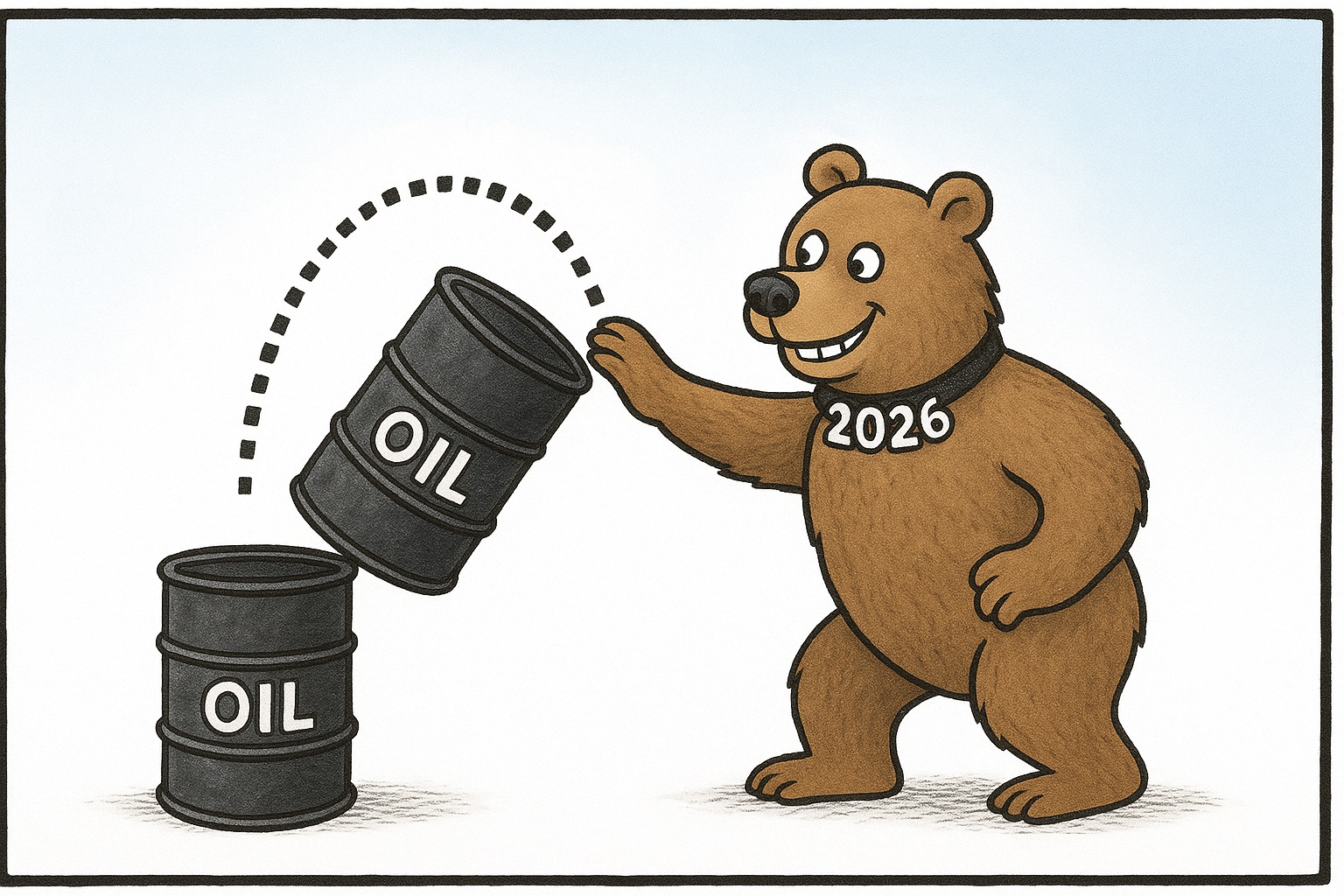
In this episode, we dive into what is driving the recent downward pressure on oil prices. The Energy Information Administration released their October short-term energy outlook with a projection that caught our attention. They’re forecasting that oil prices could fall to $47.77 per barrel in 2026—a 26% decrease from recent levels. That price sits below the $50 per barrel mark that industry analysts often cite as a critical breakeven point for shale profitability.
For those of us who own mineral rights or receive royalty payments, this forecast has real implications worth understanding. Be sure to listen to the full episode to learn our take on what oil prices are likely to do in 2026 and how this could impact your oil royalties.
The sponsor for this episode is SS&C MineralWare:

MineralWare is the leading asset management platform trusted by thousands of mineral rights owners for managing minerals, royalties, and non-operated working interests. Know in seconds where your leases are, what’s active, what acreage is open for lease, and if you are getting paid what you’re owed. See a demo today by visiting mineralware.com.
Be sure to also subscribe on Apple Podcasts via the link above and please leave us an honest rating and review. We read every one of them and sincerely appreciate any feedback you have. To ask us a question to be featured on an upcoming episode, please leave a comment below or send an email to feedback@mineralrightspodcast.com.
The Direct Impact on Royalty Income
As you would expect, a drop in oil prices will have a direct impact on your oil royalty payments. For example, if a well on your property produces 100 barrels of oil in a month and prices are at $70 per barrel, that generates $7,000 in gross revenue before costs. Assuming you own all of the minerals below that well and you are leased at a 3/16th royalty, you’d receive roughly $1,312 from that production. But when prices fall to $48 per barrel for those same 100 barrels, the gross revenue drops to $4,800, and your royalty payment falls to approximately $900.
That’s a reduction of more than 30% in your payment, even though the well is producing exactly the same amount of oil. If you’ve been budgeting based on current royalty income levels, it’s worth planning for this possibility in 2026.
Understanding the Supply Situation
The fundamental issue driving this forecast is oversupply. The United States has been producing near record amounts of oil, hitting around 13.5 million barrels per day in 2025. Brazil, Canada, and other non-OPEC countries have also been increasing production.
What’s interesting is that we’re achieving these production levels without a proportional increase in rig count. As we break down in this episode, the current rig count sits at 529 land rigs versus 586 a year ago. The explanation is efficiency—operators have improved their drilling and completion techniques, meaning higher well productivity per rig.
At these production levels, some predict supply outpacing demand by 1 to 2 million barrels per day globally in 2026, so it make sense that downward pressure on prices will follow.
Industry Perspectives
The CEO of TotalEnergies stated at an industry forum in October 2025 that non-OPEC supply, including U.S. shale production, would likely begin to decline if oil prices fall to $60 per barrel, with more significant impacts at lower price levels.
Ryan Lance, CEO of ConocoPhillips, noted that at $60 to $65 per barrel, U.S. production would probably plateau, and if prices stay at $60 or go into the $50s, production would likely plateau or slightly decline.
These statements from industry leaders provide context for what operational decisions might look like at the forecast price levels.
Different Operators Will Respond Differently
Not all operators will respond the same way to lower oil prices, and this matters for mineral owners.
Heavily Hedged Operators: Some companies have protected significant portions of their production through hedging contracts. Companies like Berry Petroleum and California Resources have hedged around 60% of their 2025 oil output, locking in prices above market levels. These operators may maintain more consistent drilling activity since their economics are partially protected from spot price volatility.
Minimally Hedged Companies: Other operators like APA Corp. and Magnolia Oil & Gas have minimal hedging protection. Companies such as Devon Energy, Diamondback Energy, and Ovintiv have generally protected around 25% of their output. These operators feel price changes more immediately and are more likely to adjust drilling programs in response to lower prices.
Geographically Diverse Producers: Major producers like ConocoPhillips and Occidental Petroleum have assets across multiple basins. These companies can shift investment between oil and gas properties based on relative economics.
The Natural Gas Outlook
While oil prices face headwinds, natural gas presents a different picture. The EIA is forecasting that Henry Hub natural gas prices will average $3.70 per million BTUs in 2025 and increase to $4.40 in 2026.
This projection is driven by significant increases in LNG export capacity coming online and anticipated demand growth from data center power generation. The United States is scheduled to add more than 5 billion cubic feet per day in LNG export capacity in 2025 and 2026 combined, with facilities like Plaquemines LNG, Corpus Christi Stage 3, and Golden Pass LNG ramping up operations.
For mineral owners with gas-weighted properties or diversified production, this provides a different economic outlook. Properties in areas like the Haynesville Shale or Appalachian Basin may see different drilling activity levels compared to oil-focused regions.
Drilled But Uncompleted Wells
One factor to watch for is an increase in drilled but uncompleted wells, or DUCs. These are wells that operators drill but don’t immediately complete with fracturing and other procedures needed to begin production.
Operators might pursue this approach for several reasons:
Lease Obligations: In areas where losing acreage would be strategically detrimental, companies may drill wells to hold leases even if they defer completions until economics improve.
Drilling Contract Obligations: Long-term rig contracts often include termination penalties. Since drilling represents roughly one-third of total well costs, operators may choose to drill and defer completion rather than pay penalties.
Strategic Positioning: Companies with hedging protection may continue selective drilling in high-quality acreage while deferring completions.
For mineral owners, this means you might see drilling activity on your property but face a delay of 12 to 18 months before receiving your first royalty check if the price of oil is below the company’s break-even price.
Practical Steps for Mineral Owners
Based on our discussion in the episode, here are some things to consider:
1. Review Your Budget: If royalty income represents a meaningful portion of your household income, consider modeling scenarios with 25-30% lower oil-based payments for 2026 planning purposes.
2. Research Your Operators: For publicly traded operators, visit their investor relations websites and review quarterly earnings presentations. Look for their capital spending plans and statements about drilling activity. Information about hedging positions and debt levels is typically disclosed in these materials.
3. Understand Your Production Mix: Review your royalty statements to determine what percentage of your income comes from oil versus natural gas. Properties weighted toward gas face different economics than oil-focused production.
4. Monitor Lease Terms: If you have leases approaching expiration in the next 12 months, be aware that operators may make different decisions about drilling to hold leases if economics are challenged.
5. Check State Railroad Commission Data: Most state oil and gas commissions have online databases where you can search for permit activity. Continued permit filings in your area can indicate that economics still support development.
The Cyclical Nature of Oil Markets
Oil markets operate in cycles. When prices fall, investment decreases, which eventually leads to production declines. As production falls and demand continues, supply tightens and prices typically recover over time.
Lower prices in 2026 could affect drilling activity, but the minerals remain in place. Properties that see reduced drilling during price weakness may see renewed activity when market conditions improve.
Looking Ahead
The 2026 oil price forecast presents challenges for mineral owners receiving oil-based royalties. The impact will vary significantly based on your specific circumstances—who operates your wells, where your properties are located, your production mix, and your lease terms.
The natural gas outlook provides a contrasting picture, with prices forecast to increase rather than decrease. Companies have generally stronger balance sheets than in previous downturns. Existing wells will continue producing.
We’ll continue covering these developments as 2026 unfolds. If you need help researching your properties or understanding how to find information on your state’s oil and gas commission website, my Mineral Management Basics course walks through these processes step by step.
Resources
- EIA Short Term Energy Outlook (STEO)
- TotalEnergies Sees Non-OPEC Supply Beginning to Drop at $60 Oil | OilPrice.com
- Assessing the Oil Price Sensitivity of U.S. E&Ps as EIA Forecasts a WTI Price Plunge | RBN Energy
Thanks for Listening!
To share your thoughts:
- Leave a comment or question below (we read each one and your question may be featured in a future episode)!
- Ask a question or leave us feedback via email.
To help out the show:
Click the Apple Podcasts Logo Above to leave us a rating & review. It really helps us reach those that need to hear this information and only takes a minute. We greatly appreciate it! Plus, you can get a shout out on a future episode!
Thanks again – until next time!
Disclaimer: This episode and accompanying show notes are provided for general information purposes and should not be construed as financial, legal, or investment advice. For guidance specific to your situation, please consult with qualified legal and financial professionals.