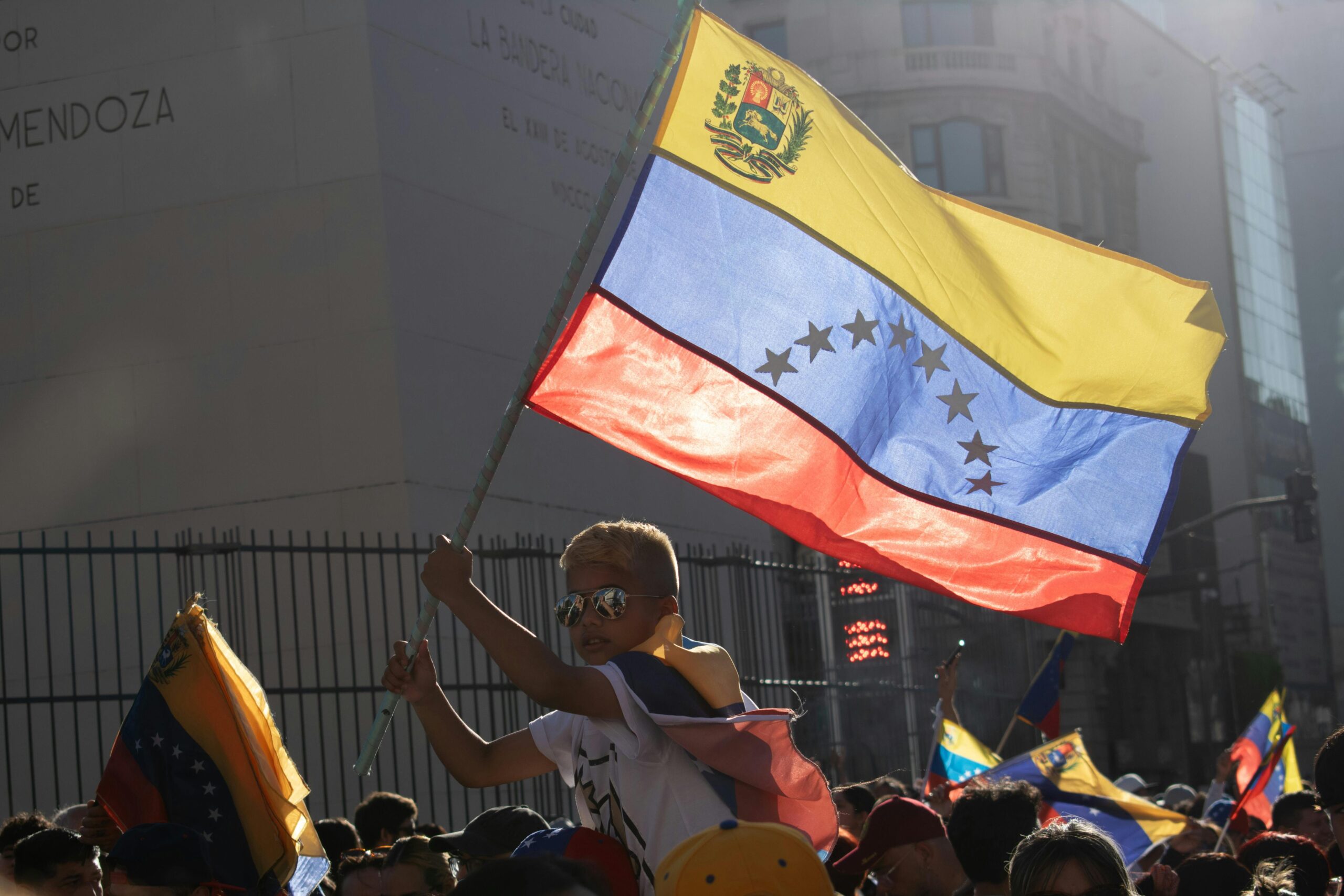
When U.S. forces captured Venezuelan President Nicolás Maduro in January 2026, headlines focused on the country’s massive oil reserves—reportedly 303 billion barrels, the largest in the world. But as we dig deeper into the technical realities of Venezuela’s extra-heavy crude, the crumbling infrastructure, and the geopolitical chess match unfolding in our hemisphere, a different story emerges. While Energy Secretary Chris Wright told oil executives that Venezuela could increase production by just 300,000 barrels per day in the near term—barely a blip in global markets of 106 million barrels daily—China has been building satellite ground stations, selling military hardware, and using debt-for-oil arrangements to gain a strategic foothold in America’s backyard. This episode reveals why the Venezuela intervention may have far less to do with oil production and far more to do with countering Chinese influence, pressuring Canada in upcoming trade negotiations, and controlling a critical piece of Western Hemisphere infrastructure that was slipping into Beijing’s orbit.
The sponsor for this episode is SS&C MineralWare:

MineralWare is the leading asset management platform trusted by thousands of mineral rights owners for managing minerals, royalties, and non-operated working interests. Know in seconds where your leases are, what’s active, what acreage is open for lease, and if you are getting paid what you’re owed. See a demo today by visiting mineralware.com.
Be sure to also subscribe on Apple Podcasts via the link above and please leave us an honest rating and review. We read every one of them and sincerely appreciate any feedback you have. To ask us a question to be featured on an upcoming episode, please leave a comment below or send an email to feedback@mineralrightspodcast.com.
The Reserve Numbers Don’t Add Up
- Venezuela claims 303 billion barrels of proven reserves, but these figures have never been independently audited and changed dramatically over time—from 100 billion barrels before Hugo Chávez to 200 billion in 2011 and 300 billion in 2023, all while infrastructure crumbled.
- Experts like Francisco Monaldi from Rice University suggest Venezuela recovers only 7-8% of extra-heavy oil in place, not the 20% used in official calculations, putting realistic reserves closer to 100-110 billion barrels.
- Even at the lower estimate, this still represents enormous resources—roughly double U.S. reserves—but it changes the conversation about Venezuela’s actual global significance.
- Production has collapsed from 3.5 million barrels per day in the 1970s (7% of global supply) to less than 1 million barrels per day today (just 1% of world output).
Venezuela’s Extra-Heavy Crude Is Uniquely Difficult
- The Orinoco Belt produces extra-heavy crude with API gravity as low as 8-12 degrees—so thick and tar-like that it requires heating the ground, diluting the crude, and heating pipelines just to move it.
- All four of Venezuela’s crude upgraders are currently shut down, limiting exports to only what can be blended with diluent—a critical bottleneck that’s strangling production.
- Venezuela depends on diluent imports and this could be a bottleneck to increasing production.
- This heavy, sour crude yields more diesel and asphalt than gasoline, making it perfect for U.S. Gulf Coast refineries that were specifically designed for this type of oil, but requiring complex and expensive refining equipment.
Infrastructure Crisis Limits Near-Term Growth
- Energy Secretary Wright’s projection of 30% production growth translates to just 300,000 additional barrels per day—a volume that would have little impact on global markets.
- Export deals with Vitol and Trafigura to move 50 million barrels have progressed slowly, with only 7.8 million barrels exported as of late January due to storage challenges and customer reluctance to pay asking prices.
- PDVSA’s own documents show pipelines haven’t been updated in 50 years, with an estimated $58 billion needed just to restore infrastructure to peak production levels.
- Realistic assessments suggest tens or even hundreds of billions of dollars over many years would be required, with experts emphasizing that current investment figures are educated guesses until Western companies can assess actual conditions on the ground.
Could the Real Story be Geopolitics, Not Oil?
- China has become Venezuela’s largest oil customer (81.7% of exports), largest lender through debt-for-oil arrangements, and has constructed two satellite ground stations that Beijing can remotely access—giving the People’s Liberation Army potential surveillance capabilities near U.S. borders.
- Venezuela has been the largest buyer of Chinese military hardware in Latin America, raising concerns about Chinese military presence in the Western Hemisphere.
- The intervention allows the U.S. to pressure Canada in upcoming USMCA trade negotiations by reducing dependence on Canadian heavy crude, while simultaneously cutting off Chinese access to Venezuelan oil and strategic infrastructure.
- Combined oil reserves from Venezuela, Guyana, and the United States would give the U.S. control over approximately 30% of global oil reserves—a massive geopolitical advantage over rivals like Saudi Arabia.
Long-Term Energy Security vs. Short-Term Market Impact
While Venezuelan production recovery could take a decade or more, securing access now positions the U.S. for future supply challenges when finding new heavy crude sources becomes critical.
The International Energy Agency estimates approximately 25 million barrels per day of new oil supply projects will be needed by 2035 to keep markets in balance, with industry geologists uncertain about where oil will come from in the 2030s and 2040s.
Current global markets are oversupplied, with the IEA projecting surplus could reach 2 million barrels per day in 2026, making Venezuela’s modest near-term production increases largely irrelevant to current prices.
U.S. refiners require an estimated 2.5-3 million barrels per day of heavy crude imports, with alternatives like Mexican exports declining and Canadian crude facing pipeline constraints and potential tariffs.
Resources
- China-Venezuela Fact Sheet: A Short Primer on the Relationship | U.S. – U.S.-China Economic and Security Review Commission
- Venezuela’s Prized Extra-Heavy Crude Oil: Thick Potential and Pitfalls – RBN Energy
- Wright tells oil executives that Venezuela’s output can rise 30%, sources say – Reuters
- Venezuelan oil exports under supply deal with US progressing slowly – Reuters
- Trump says US is taking control of Venezuela’s oil reserves. Here’s what it means – CNN Business
- Increasing Venezuela’s Oil Output Will Take Several Years—and Billions of Dollars – Council on Foreign Relations
- Why access to Venezuela’s ‘heavy’ oil is ‘tremendous’ news for US refiners – Al Jazeera
- Venezuela: Impact on Oil and LNG Markets – J.P. Morgan
- How Venezuela’s Oil Reserves Compare to the Rest of the World – Visual Capitalist
- Venezuelan Oil and the Limits of U.S. Refining Capacity – OilPrice.com
- Why the US has designs on Venezuela’s oil – PBS NewsHour
- Explaining Trump’s Claim That Venezuela ‘Stole’ U.S. Oil – FactCheck.org
- Did Venezuela steal American oil and assets? | The World | ABC NEWS
Thanks for Listening!
To share your thoughts:
- Leave a comment or question below (we read each one and your question may be featured in a future episode)!
- Ask a question or leave us feedback via email.
To help out the show:
Click the Apple Podcasts Logo Above to leave us a rating & review. It really helps us reach those that need to hear this information and only takes a minute. We greatly appreciate it! Plus, you can get a shout out on a future episode!
Thanks again – until next time!
Disclaimer: This episode and accompanying show notes are provided for general information purposes and should not be construed as financial, legal, or investment advice. For guidance specific to your situation, please consult with qualified legal and financial professionals.