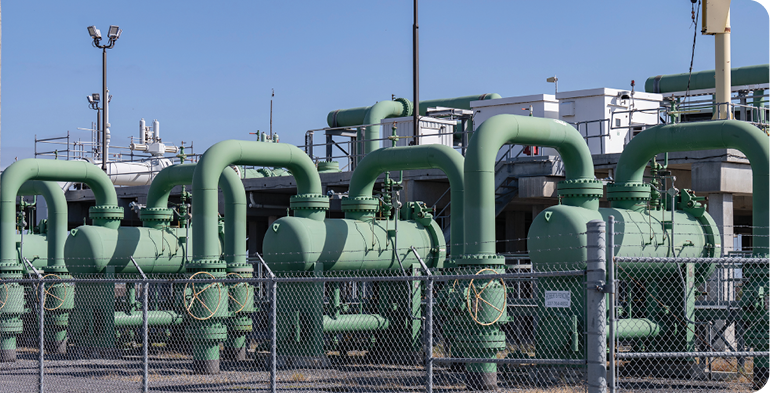
An oil and gas company just knocked on your door and offered to buy a piece of your land for a compressor station. The check sounds good — maybe even great. But before you sign anything, there’s a lot more to think through than just the dollar amount. In this episode, we dig into one of the less-discussed situations a landowner can face: being approached to permanently sell surface land for industrial oil and gas infrastructure. From understanding what a compressor station actually is, to navigating the tax implications of a sale versus a lease, to making sure the protections you negotiate actually survive if the company sells the property to someone else — this episode walks you through the key questions to ask and the mistakes to avoid.
The sponsor for this episode is SS&C MineralWare:

MineralWare is the leading asset management platform trusted by thousands of mineral rights owners for managing minerals, royalties, and non-operated working interests. Know in seconds where your leases are, what’s active, what acreage is open for lease, and if you are getting paid what you’re owed. See a demo today by visiting mineralware.com.
Using the embedded player above, you can download the episode to your computer or listen to it here!
Be sure to also subscribe on Apple Podcasts via the link above and please leave us an honest rating and review. We read every one of them and sincerely appreciate any feedback you have. To ask us a question to be featured on an upcoming episode, please leave a comment below or send an email to feedback@mineralrightspodcast.com.
What Exactly Is a Gas Compressor Station?
Most landowners have never had to think about compressor stations until one is proposed on their property. These are large industrial facilities that include compressor units, scrubbers, cooling systems, piping, valves, and metering equipment — all operating around the clock, seven days a week. They’re not a temporary presence. Depending on whether the station serves an interstate pipeline, it may be regulated by the Federal Energy Regulatory Commission (FERC), which sets specific noise standards, or it may fall under state and local rules that vary considerably. Understanding what type of facility you’re being asked to host — and what regulatory framework governs it — is the essential first step before any negotiation begins.
Key Takeaways:
- Compressor stations are permanent, industrial-scale facilities with noise, emissions, lighting, and traffic that operate 24/7 — not a minor surface disturbance.
- FERC-regulated stations (those serving interstate pipelines) must meet a maximum noise standard of 55 decibels averaged day and night — roughly equivalent to a household refrigerator — though startup and shutdown cycles can temporarily exceed that.
- If the station isn’t FERC-regulated, noise and emissions protections depend entirely on state and local ordinances, which vary widely and may offer far less protection than you’d assume.
Sell or Lease? Understanding the Fundamental Trade-Off
When a company approaches you about hosting a compressor station, their default offer is usually to buy the land outright — but that’s not always the only option. A sale is permanent: you’re conveying full ownership and walking away from any ongoing role. A surface use agreement or lease keeps you in the picture, but it’s more like having a long-term tenant — requiring ongoing management and creating potential headaches if disputes arise. Companies often prefer to buy because these facilities are effectively permanent assets, sometimes described as 100-year infrastructure. The right path depends on your goals, your relationship to the land, and how much ongoing involvement you want.
Key Takeaways:
- A sale is a clean break — you receive a lump sum and transfer all responsibility — but it’s irreversible, and the implications for your remaining land must be weighed carefully before signing.
- Income from a lease or surface use agreement is generally taxed as ordinary income at your marginal tax rate, while proceeds from a land sale may qualify for long-term capital gains treatment — potentially a significant difference depending on your tax situation.
- If you inherited the property, a step-up in basis could substantially reduce the capital gains tax owed on a sale — making the after-tax proceeds far more favorable than you might expect.
The Hidden Costs: Noise, Odor, Light, and Property Value
The purchase price isn’t the only number that matters. A compressor station next door can affect the value of your remaining land, the quality of life on your property, and your relationships with neighbors — and the effects can be substantial. In New York, homeowners near compressor stations saw property value assessments drop 20 to 50 percent. A Texas compressor station was cited for odor violations described as “overpowering and nausea-inducing,” resulting in a $1.9 million lawsuit from surrounding landowners. These aren’t worst-case outliers — they’re realistic outcomes if the right protections aren’t built into the agreement from the start.
Key Takeaways:
- The location of the parcel being sold relative to your home and remaining land is critical — a station on the far corner of a large property is a very different situation than one near your house, and the proximity should inform how hard you negotiate on noise and buffering requirements.
- You can require specific mitigation measures in the sales contract: berms, tree lines, fencing, and sound barriers that go beyond what regulations require — protections that meaningfully reduce noise, odor, and light pollution without waiting for a violation to occur.
- Any agreement should require the buyer to assume full environmental liability for cleanup, both now and in the future — and those terms need to be written into the deed or recorded document, not just a side agreement, so they survive if the property changes hands.
Negotiating Leverage: You Have More Power Than You Think
Companies choose specific locations for compressor stations based on pipeline routing and terrain — they typically need stations placed every 40 to 100 miles and have limited flexibility on placement. If your land sits in the optimal location, you’re not just one option among many. That geographic reality gives you real negotiating leverage, and it’s worth understanding before you accept the first offer. Compensation should reflect not just the market value of the acres being sold, but also the permanent nature of the use, the impact on your remaining land, and the unique value your location provides to their operation.
Key Takeaways:
- The company is approaching you because your property is well-positioned for their pipeline — that’s leverage, not coincidence. If rerouting the pipeline is expensive or impractical, you may be closer to the only viable option than they’ll admit.
- Get an independent appraisal of the land before negotiating, and hire a landman familiar with pipeline right-of-way work — they can review the plats and route diagrams and help you understand exactly how much flexibility the company actually has.
- Don’t negotiate only on price — negotiate on terms. Screening requirements, road maintenance obligations, dust control, abandonment and reclamation provisions, and restrictions on future uses of the sold parcel all have real value and should be part of the conversation.
Legal and Tax Essentials: Get the Right Help Before You Sign
This is not a situation to navigate alone or with generic legal advice. The terms you agree to will govern what happens on — and adjacent to — your land for potentially decades. An attorney experienced in oil and gas agreements in your specific state can help you understand what protections are standard, what’s negotiable, and what language will actually hold up if the property is sold to a different operator in the future. Similarly, a CPA should review the tax implications before you commit — the timing and structure of the transaction can have a significant effect on what you actually net.
Key Takeaways:
- Any restrictions, mitigation requirements, or liability provisions should be recorded in the deed or in a document filed with the county — not just included in a private agreement — so they remain enforceable even if the property is sold to another operator.
- Make sure the contract specifies the exact legal description of what’s being sold, the precise permitted uses of the land, and what happens at the end of the facility’s life — including who is responsible for reclamation and remediation.
- NARO membership gives you access to a vetted directory of oil and gas attorneys and service providers — a useful starting point if you don’t already have counsel. Use code MRPODCAST to save $25 on your first year of membership.
Resources
- Penn State Extension: Understanding Natural Gas Compressor Stations
- Kimray: How a Gas Compressor Station Works
- Learning About Proposed Natural Gas Projects Near You | Federal Energy Regulatory Commission
- NARO Membership — use code MRPODCAST for $25 off first-year membership
- MRP 15: They are Going to Drill on my Land – How Long Before I Start Getting Paid Oil & Gas Royalties? (Hint: It Might Be Faster than You Think!)
- MRP 23: How to Negotiate a Surface Use Agreement
- MRP 83: Saltwater Disposal Well Agreements
- My Mineral Management Basics Course — Step-by-step foundation for understanding what you own, performing a title search, and identifying nearby activity.
Thanks for Listening!
To share your thoughts:
- Leave a comment or question below (we read each one and your question may be featured in a future episode)!
- Ask a question or leave us feedback via email.
To help out the show:
Click the Apple Podcasts Logo Above to leave us a rating & review. It really helps us reach those that need to hear this information and only takes a minute. We greatly appreciate it! Plus, you can get a shout out on a future episode!
Thanks again – until next time!