You spot a new drilling permit near your minerals, and months later you hear a rig came and went. You check the state website and see the well has been completed. Still no check. Is the well producing? Are you even included in it? Or is everyone just behind on paperwork? The confusing part is that two separate clocks are running at once. One tracks what’s happening in the field. The other tracks what’s happening in the operator’s office to figure out who gets paid and how much. In this episode, we tell you how to follow both, so you know what each milestone means and exactly what to ask the operator when you think a check is due.
Using the embedded player above, you can download the episode to your computer or listen to it here!
Be sure to also subscribe on Apple Podcasts via the link above and please leave us an honest rating and review. We read every one of them and sincerely appreciate any feedback you have. To ask us a question to be featured on an upcoming episode, please leave a comment below or send an email to feedback@mineralrightspodcast.com.
The sponsor for this episode is SS&C MineralWare:

MineralWare is the leading asset management platform trusted by thousands of mineral rights owners for managing minerals, royalties, and non-operated working interests. Know in seconds where your leases are, what’s active, what acreage is open for lease, and if you are getting paid what you’re owed. See a demo today by visiting mineralware.com.
Two Timelines, Not One Countdown
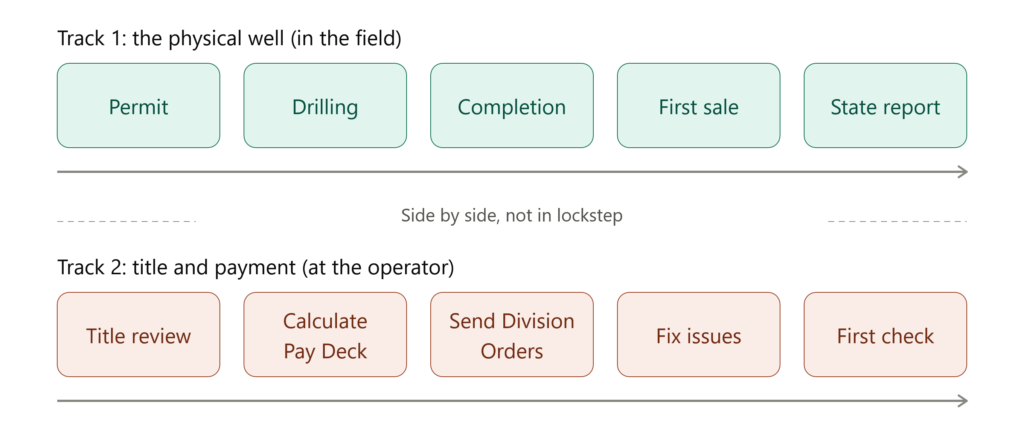
Most of the confusion about “when will I get paid?” comes from treating the whole process as one countdown. It’s really two processes running side by side. The first is the physical life of the well: the permit, drilling, finishing the well so it can flow, the first sale of oil or gas, and the production report to the state. The second happens behind the scenes at the operator, who has to confirm who owns what, calculate each owner’s share, send out paperwork, and clear up any ownership questions. These two tracks don’t move in lockstep. A well can be producing while your account is still stuck at the title review stage. The operator also does a lot of this work early, because drilling on minerals they haven’t leased or legally pooled would be trespassing. If you only watch the well, you can miss a paperwork problem for months. If you only call the operator, you may not know enough to ask a sharp question. Watching both tells you whether you’re waiting on the field, on the public records, or on something specific to your account.
Understand Your Wells First
Before you track any dates, gather the details that tie your property to the right well. Write down the state and county, your legal description exactly as it appears in your deed or lease, the operator, the well name and number, the permit number, and the API number, which is the closest thing a well has to a Social Security number. Save the source document next to each item. One caution for horizontal wells: don’t judge whether you’re “in” or “out” by where the drilling pad sits. The pad can be a mile from your land while the well travels right under it. Open the permit and the plat map to see the actual path. If you already get paid on other wells in a unit and the operator drills more wells in that same unit, there’s a good chance you’ll share in the new ones too. Then use this script for your first call: “I’m trying to match my ownership records to this well. I have the well name, API number, legal description, and permit number. Can you confirm whether your records show my account connected to this property, who is responsible for paying the royalty, and whether you need anything from me right now?” It asks three questions the operator can answer, which beats a vague “what’s going on with my well?”
What Each Milestone Proves (and What It Doesn’t)
Each step in the field tells you something specific, and it’s just as important to know what it doesn’t tell you.
- A permit is permission from the state. It doesn’t mean money is committed or a rig is scheduled. In Texas, an operator has two years from approval to start drilling, and they can reapply after that. Some permitted wells never get drilled, especially if oil prices drop or the operator decides the wells would crowd each other.
- Spud, meaning the drill bit starts turning, is the first real proof drilling began. It’s still not production.
- A “Drilled but UnCompleted” well (the industry calls it a DUC) has been drilled but not yet fracked or connected to sales. A well can sit this way for a year or more. The rig leaving does not start your payment clock.
- A completion report shows how the well was finished, but it doesn’t give you the first-sale date. In Texas, it can be filed up to several months after the work is done.
- First sale is the date that matters most, because it starts the legal payment clocks. That date comes well before production shows up in a state database. Texas production reports are due the last day of the following month, so there’s about a two-month lag. A blank database doesn’t mean the well isn’t producing.
Where to Look for More Information: Texas and Oklahoma
I won’t repeat the step-by-step walkthroughs from earlier episodes. MRP 226: How to Use the Texas Railroad Commission Website covers the Texas Railroad Commission, and MRP 227: How to Find Oil and Gas Info for Oklahoma covers Oklahoma. In Texas, search the drilling permit and plat, then the completion records, then the production data. Remember that Texas reports oil by lease, not by individual well. Oklahoma has one important change since our last episode: the old Well Browse tool is gone. Use the Corporation Commission’s Well Data Finder or its well search instead. For Oklahoma production history, go to the Oklahoma Tax Commission and search by Production Unit Number. Other states follow the same concepts, though form names differ. Colorado, for example, requires more notices to be filed by the operator, so you can see exactly where a well is in the process.
The Revenue Track: Title, Division Orders, and Suspense
Even after a well is selling, the operator has to figure out who legally owns the revenue, calculate each owner’s share, and send paperwork. That paperwork includes the division order, which is the document confirming your ownership share and directing how you get paid. In Texas, you generally have to sign and return it before payment starts. You’ll also need to send a tax form so they have your tax ID. If you don’t get a division order within six months of the well starting to produce, treat it as a red flag and call the operator. Sometimes an owner’s money is held in “suspense,” which simply means the operator is holding your share until something is resolved. Common reasons include an unsigned division order, a missing link in the chain of title (the minerals are still in your grandfather’s name and never went through probate), a recent death, a bad address, or an uncashed check. If there is a title issue, ask for the specific missing item, in writing, and where to send it.
The Payment Clocks
The legal deadlines run from first sale, not the permit, the spud, or the completion date. In Texas, the first payment is generally due within 120 days after the end of the month of first sale. If sales started in July, count from July 31, which puts you around late November. In Oklahoma, payment must generally begin within six months of first sale. Both come with exceptions, such as title disputes and lease terms, so use these dates to ask a better question, not to make accusations. If you have a very small interest, you might also wait a couple of months because many operators hold payments until they reach a minimum amount, often around $100. Be politely persistent with the operator, but weigh the effort against the dollars involved.
A Worked Example: Two Timelines Side by Side
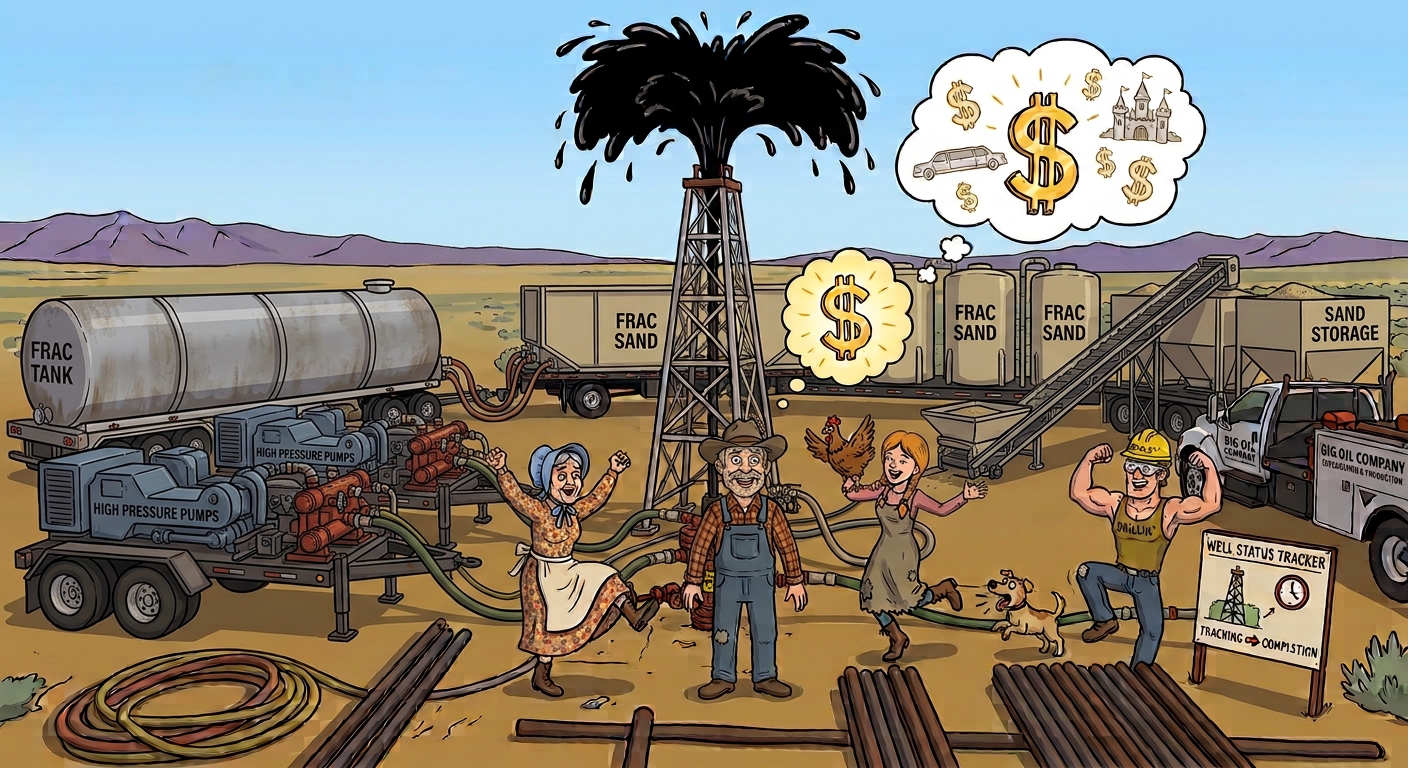
In the episode, we walk through a made-up Texas family whose minerals sit under a horizontal well, even though the pad is on someone else’s land. On the field side, they track the permit, the spud, the completion report, and the first-sale date, which they get from the operator. They don’t assume anything from the rig leaving. On the paperwork side, they confirm their account exists, review their division order carefully before signing, return it with their tax form, and learn one inherited interest is in suspense. They get a written requirement, fix it, and move to pay status. The key point is that the public production data never would have revealed their title problem, and the operator’s answer never would have shown the wellbore path. They needed both. When the first check arrives, compare the owner name, well, production months, decimal, volumes, price, taxes, and deductions against your paperwork. If the first check covers several months, record each month separately instead of treating the total as a normal monthly amount.
Your Permit-to-Payment Action Plan
Here’s the simple version. Understand the specifics surrounding your wells. Keep two separate logs, one for field milestones and one for every conversation and document with the operator. Label each entry confirmed, reported, estimated, or unknown, because a neighbor’s text is a lead, not a record. Ask focused questions: What’s the first-sale date in your system? Am I in pay status or suspense? If there is a title issue, what information or documentation do you need from me to put the interest into “Pay” status? What’s my decimal?
Keep track of your important documents, including: your deed, lease, or probate record; the permit and plat for your well(s); the completion report and wellbore path; the division order and title correspondence; and your first check statement.
Know when to call a professional. That includes unclear unit or pooling treatment, a division order decimal that doesn’t match your math, a payment that looks past its legal deadline, competing claims on your interest, or anything involving a deceased owner, trust, or divorce. Even a small difference in your decimal interest, like 0.1% of a big horizontal well, can mean thousands of dollars, so errors matter.
If you need help from a professional, you can book a free initial consultation today with Matt to help you understand your options.
Resources Mentioned in This Episode:
- Mineral Management Basics Course (how to find and download important documents like deeds, leases, and well files)
- MRP 34: Important Documents for Mineral Rights and Royalties
- MRP 226: How to Use the Texas Railroad Commission Website
- MRP 227: How to Find Oil and Gas Info for Oklahoma
- MRP 343: How to Get Your Operator to Actually Answer You
- MRP 16: What You Need to Know about Oil & Gas Division Orders
- MRP 176: Behind the Scenes – Well Planning
- MRP 15: They are Going to Drill on my Land – How Long Before I Start Getting Paid Oil & Gas Royalties? (Hint: It Might Be Faster than You Think!)
- MRP 166: How to Read and Manage Your Royalty Statements
- MRP 97: How to Audit Your Oil and Gas Royalty Statements
Thanks for Listening!
To share your thoughts:
- Leave a comment or question below (we read each one and your question may be featured in a future episode)!
- Ask a question or leave us feedback via email.
To help out the show:
Click the Apple Podcasts Logo Above to leave us a rating & review. It really helps us reach those that need to hear this information and only takes a minute. We greatly appreciate it! Plus, you can get a shout out on a future episode!
Thanks again – until next time!
Disclaimer: This information is provided for general information purposes and should not be construed as financial, legal, or investment advice. For guidance specific to your situation, please consult with a qualified attorney, CPA, or financial advisor.